Tenebrae Lux · GTA 6
Tenebrae Lux Phone Code: All 10 Clues, Converted
The short answer
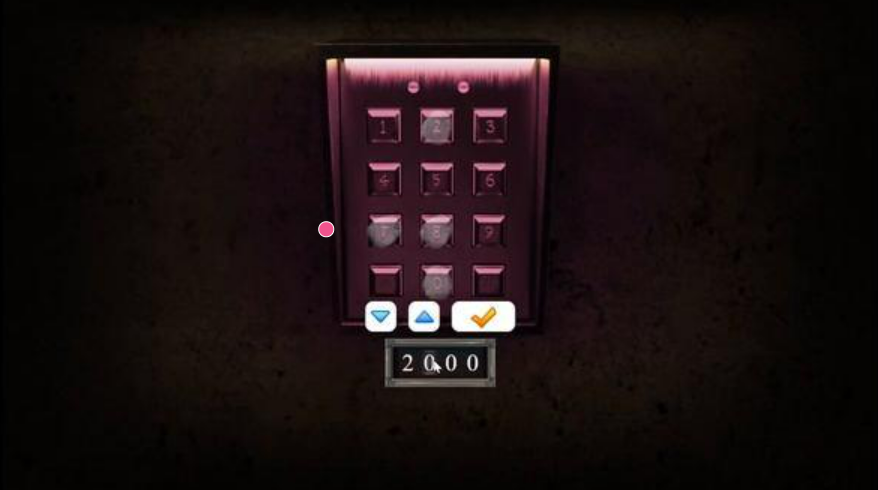
The Tenebrae Lux phone code is six digits, one for each of six October dates, dialled in calendar order and finished with the hash key. There is no universal code: which object changes on which date is shuffled per save. You read your own room, turn each change into a digit, and the phone code solver assembles the number for you.
The six dates never change
The calendar on the wall of the bunker always shows the same six days. Only the clue attached to each one moves around.
| Order in the code | Date |
|---|---|
| 1st digit | October 11 |
| 2nd digit | October 14 |
| 3rd digit | October 20 |
| 4th digit | October 23 |
| 5th digit | October 27 |
| 6th digit | October 30 |
That table is the order you type. Not the order you found the clues. A code that is correct but entered in visit order fails, and it is the most common failure in the whole puzzle.
How the room works
At the top of the bunker stairs there is a room with a phone on the wall and a calendar above it. Each time you climb the stairs, the calendar shows one of the six dates and exactly one object in the room is different from normal. Walk back out through the door beside the phone, climb again, and you get the next date.
Your first climb is the reference: do not change anything, just look at the painting, the lamp, the record, the player, the phone, the desk document, the clock, the engine credit, the framed photo and the tape player, and note how each of them normally looks. Every later climb is a comparison against that first look.
Not every room contains all ten objects. A room with no clock is not a bug — that clue simply is not in your save, and one of the others will cover that date.
Every clue, and exactly how to read it
Painting — Roman numeral in the columns
The painting by the door has columns that form a Roman numeral. Read the numeral, then add its digits together until one digit is left. XIII is 13, and 1 + 3 = 4. If the painting is not the changed object, leave it alone: the original numeral is a trap that produces a plausible but wrong digit.
Lamp — Morse flashes
The desk lamp flickers in long and short flashes. Long is a dash, short is a dot. The chart on the wall to the right of the calendar lists all ten digits, and each digit is exactly five signals: three short then two long is 3, and five long is 0. Count the short flashes first, then check the chart, because the same five signals read backwards give a different digit.
Record price — digits added
The vinyl record has a price tag that changes. Add the digits of the price in cents until one digit is left: 85 becomes 13, and 13 becomes 4. A price that is already one digit stays as it is.
Slow music — always 6
The record in the room plays noticeably slower than usual. A slow record is 33 rpm, and 3 + 3 = 6. This clue gives the same digit in every save where it appears.
Phone rings — the count itself
The phone rings a different number of times. The number of rings is the digit. Do not subtract the usual number of rings, and do not add anything to it. Five rings is 5.
Protocol number — digits added
The desk document usually has its file number blacked out. On the changed date the number is printed instead. Add its digits until one is left: 42 becomes 6.
Clock — from the hour hand, clockwise to the minute hand
The clock above the calendar shows a different hour, and this is the clue that starts arguments, so here is the whole of it. The book in the room does not tell you to take the smaller angle between the hands. It tells you to count from the hour hand, clockwise, to the minute hand, then add the digits of that angle.
On an hour mark the two readings agree at four hours and disagree at four:
| Hour shown | Clockwise from hour to minute | Digit | Short way round | Digit |
|---|---|---|---|---|
| 1:00 | 330° | 6 | 30° | 3 |
| 2:00 | 300° | 3 | 60° | 6 |
| 3:00 | 270° | 9 | 90° | 9 |
| 4:00 | 240° | 6 | 120° | 3 |
| 5:00 | 210° | 3 | 150° | 6 |
| 6:00 | 180° | 9 | 180° | 9 |
| 7:00 | 150° | 6 | 150° | 6 |
| 8:00 | 120° | 3 | 120° | 3 |
The patterns most guides quote come from this table. "Seven is 150°, not 210°" proves nothing, because both readings give 150° at seven. The rows that actually separate the two rules are 1:00, 2:00, 4:00 and 5:00, and the reported working codes follow the clockwise column.
The solver above therefore uses the clockwise reading, and when the two readings disagree it prints the other digit underneath, so you have a second number to try instead of resetting the room. It also accepts minutes: if the clock shows half past, enter the minutes rather than rounding to the hour.
Unlike most clues, the clock can only ever produce 0, 3, 6 or 9 — every angle on the grid ends up as a multiple of 30, and adding the digits of 30, 60, 90 and so on always lands on one of those four. If your working needs a 4 in that position, the clock is not your clue.
Engine letter — its place in the Greek alphabet
The loading screen ends with a line crediting a made-up engine. On the changed date the Greek letter at the end of that credit is different: α is 1, β is 2, γ is 3, δ is 4, ε is 5. Take the letter's position, not its shape.
Framed photo — count the people
The photo on the desk has fallen over and shows a different group. Count everyone in it, including the figures in the background. That count is the digit. Miscounting the background is the usual error here.
Tape date — the one digit that changed
The tape player's recording names a date. Compare it with the date the tape normally names and find the single digit that changed: 1926 turning into 1924 gives 4. If two digits look different, you are probably comparing against a different date, not the normal one.
Which digits a clue can produce
Some clues are direct — rings, Greek letter, people in a photo, the changed digit on a tape — so they can be anything from 1 to 9. Others pass through a sum of digits, which narrows the range. This is useful when a digit looks wrong: you can sometimes rule a clue out entirely.
| Clue | Digits it can give |
|---|---|
| Phone rings, framed photo | 1–9 (the count itself) |
| Engine letter (α–ε) | 1–5 |
| Slow music | 6, always |
| Clock | 0, 3, 6 or 9 |
| Painting, record price, protocol number | 1–9, depending on the value |
| Tape date | 0–9, the digit that changed |
| Lamp (Morse) | 0–9, read from the wall chart |
Three rules that are still reverse-engineered
Most of this page is straight off the game: the dates, the order, the Morse chart, the Roman numeral, the angle rule. Three rules are not. They were worked out by fitting the codes players reported working, and they are the three most likely to bite you:
- Slow music. Only the slow 33 rpm version has been confirmed as 6. A record that plays faster has no confirmed digit.
- The Greek letter. α to ε is confirmed. Letters past ε (ζ onwards) follow the alphabet position by extrapolation, not by confirmation.
- The framed photo. Up to nine people is the count itself. More than nine needs folding into one digit, and nobody has posted a confirmed case yet.
The solver still gives you a digit for all three, because a digit you can try beats no answer — but it marks those rows so you know which ones to doubt if the door refuses.
A worked example
Six digits, built from six different clues, entered in date order:
| Date | Clue | What the player saw | Digit |
|---|---|---|---|
| Oct 11 | Lamp | three short, two long | 3 |
| Oct 14 | Engine letter | α | 1 |
| Oct 20 | Record price | 456 cents → 4+5+6 = 15 → 1+5 | 6 |
| Oct 23 | Tape date | 1926 → 1924 | 4 |
| Oct 27 | Phone rings | rang twice | 2 |
| Oct 30 | Framed photo | five people | 5 |
The code is 316425, then #. This is a demonstration of the arithmetic, not a code from any save — yours will be built from the clues your room actually shows.
Dial order, then the hash
Type the six digits from October 11 to October 30 and press #. The desk document in the room says the same thing, and the door will not open without the hash. If all six are in and the door still refuses, move to why the code is not working rather than resetting the room.
Frequently asked questions
Why do my six digits not match my friend's?
Because the room shuffled the clues between your two saves. Both answers can be right. Only one opens your door.
Can I skip a date?
No — the code needs all six digits. If a date has no obvious change, look at the objects you have not seen change yet; a missing object (no clock, a phone that never rings) means that clue is absent, and the change for that date will be on something else.
I only have five changes and I have climbed six times
You have probably seen one date twice. Check the calendar each climb and write the date down with the change; the solver above tracks six dates in order, so the missing one stands out.
Does the code change if I leave and come back later?
The clues are fixed for your save. Climbing again shows another of the same six dates, not a new set.
Can the same object change on two dates?
In the rooms players have mapped so far, each date has its own change. If you believe you have seen the same object twice, re-check the first one — one of the two is usually the object's normal state.